

 Nkahoot
 The Monroe Doctrine – From 1823 to Today’s Headlines
By Buster MacDonald | Nkahoot News
Introduction: Why Are We Talking About This?
The Monroe Doctrine is trending again, thanks to the U.S. arrest of Venezuela’s Nicolás Maduro. Yes, the same doctrine that debuted when James Monroe was president—back when leeches were considered medicine—is now being cited in 2026. If history had a subscription plan, this would be the auto-renew feature nobody asked for.
What Is the Monroe Doctrine?
Let’s rewind to 1823. President James Monroe steps up and says to Europe: “Stay out of the Western Hemisphere. No new colonies. No meddling.” Translation: “This hemisphere is reserved seating, and we’re the ushers.”
The doctrine had two big goals:
- Protect newly independent Latin American nations from European recolonization.
- Assert U.S. influence in the region without actually saying, “We want to be the boss.”
Here’s the kicker: It wasn’t backed by U.S. military muscle at first. Instead, it leaned on British naval power—because nothing says independence like outsourcing your enforcement.
How Did It Evolve?
Over time, the Monroe Doctrine went from a polite warning to a full-blown permission slip for U.S. interventions in Latin America. Think of it as the original “terms and conditions” nobody read, but everyone suffered through.
- 19th Century: Mostly symbolic.
- Early 20th Century: Theodore Roosevelt adds the “Roosevelt Corollary,” turning the doctrine into a justification for U.S. policing in Latin America.
- Cold War Era: Used to block Soviet influence in the Americas.
- Modern Day: Pops up whenever Washington wants to remind the world who’s boss in the neighborhood.
Mixed legacy? Absolutely. For Latin America, it often felt less like protection and more like supervision with a side of intervention.
Why Is It Relevant Today?
Fast-forward to January 2026. The U.S. arrests Nicolás Maduro, citing—you guessed it—the Monroe Doctrine. Suddenly, a 19th-century policy is the legal backbone of a 21st-century geopolitical drama.
Here’s the irony: The doctrine was originally about keeping outsiders out. Now it’s being used to justify America going inside someone else’s borders. That’s like telling your neighbor not to touch your lawn while you’re building a pool in theirs.
The Good, The Bad, and The Awkward
- The Good: It helped Latin America stay free from European colonialism.
- The Bad: It opened the door for U.S. interventions that weren’t always welcome.
- The Awkward: Every time it resurfaces, it reminds us that foreign policy is basically history playing dress-up.
Modern Implications
The Monroe Doctrine isn’t just a dusty relic—it’s a living precedent. Today, it signals that the U.S. still sees the Western Hemisphere as its strategic backyard. Whether that’s about security, economics, or influence, the message is clear: “We’re still watching.”
But here’s the question: Does invoking a 200-year-old policy make sense in a globalized world? Or is it like using a flip phone to run a tech company? Spoiler: Both are technically possible, but neither looks good.
Conclusion: Why It Still Matters
The Monroe Doctrine started as a principle. It became a precedent. And now, it’s a headline. Its legacy is complicated—part shield, part sword. For Latin America, it’s a reminder that protection often comes with strings attached. For the U.S., it’s proof that old policies never die—they just get new job descriptions.
Moral of the story: Foreign policy is like vintage clothing—sometimes it’s stylish, sometimes it’s just outdated, but it always makes a statement.
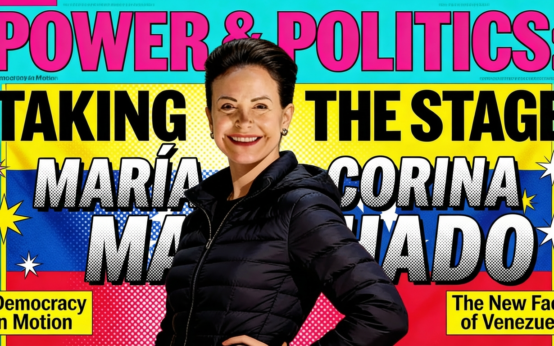 Trump Wants to Meet María Corina Machado—and Thinks She Deserves a Nobel Prize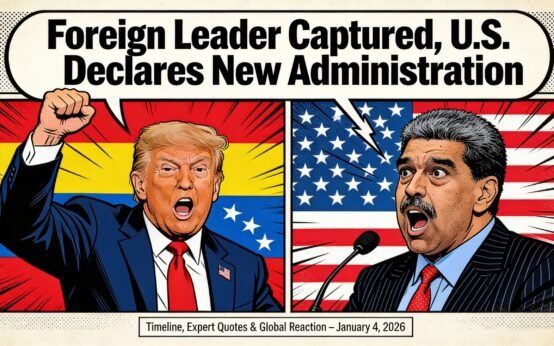
 U.S. Foreign Policy: Allies and Adversaries in 2026
  Trump, NATO, Putin & Sanctions: The Political Jenga Game Nobody Asked For